
Abstract Paintings for Sale: Original Canvas Art Guide
Table of Contents
Abstract Paintings for Sale: An Insider's Guide to Collecting Original Work
Original Abstract Paintings for Sale: What Sets Them Apart
How to Buy Abstract Art Online Without Getting Burned
Abstract Canvas Art: Mediums That Shape the Final Work
How to read a medium before you buy
What the medium means for care and cost
A quick comparison
Abstract Oil Paintings on Canvas: Depth, Texture, and Longevity
Evaluating Quality and Value in Abstract Paintings
Choosing the Right Size and Placement for Your Space
Start with the wall, not the painting
Room-by-room guidance
Lighting and palette
Before you commit
Conclusion: Making a Confident Purchase
Frequently Asked Questions
Last Updated: October 5, 2026
Abstract Paintings for Sale: An Insider's Guide to Collecting Original Work
Buying abstract paintings for sale has never been easier, and never more confusing.

A collector standing in a bright modern living room, admiring a large abstract painting on the wall, natural light highlighting the texture and colors
An abstract painting is a work of art that uses color, form, line, and texture rather than recognizable subject matter to create meaning.
Key Takeaway The strongest purchases start with a question, not a color scheme: what do you want the work to do in the room, and what drew you to it in the first place?
Original Abstract Paintings for Sale: What Sets Them Apart
An original abstract painting is a one-of-a-kind work made by the artist's hand, while a print or reproduction is a copy produced mechanically or digitally. That distinction drives nearly everything else: price, resale, and long-term value.
Original artwork carries the artist's direct mark, surface texture, and material choices
Limited-edition prints are numbered and signed but still reproductions of an image
Open-edition prints are unlimited copies with the least collectible value
A common mistake is assuming a large print and a small original are comparable purchases. They are not. The original holds material history: brushwork, layering, and decisions you can see up close but not in a copy.
How to Buy Abstract Art Online Without Getting Burned
Buying abstract art online comes down to three things: provenance, condition, and return terms. Verify all three before you pay.
Ask for documentation first. A legitimate seller should provide:
A certificate of authenticity signed by the artist or gallery
The title, year, medium, and dimensions of the piece
Provenance details, including exhibition history where relevant
Then confirm the practical terms. Reputable sellers offer clear shipping, returns, and exchange policies, and a satisfaction guarantee. The Federal Trade Commission guidance on advertising and endorsements is a useful reference for how claims about authenticity and origin should be substantiated.
Watch Out Skipping the return window is the most expensive mistake in online art buying. If a seller offers no returns or exchanges, you carry all the risk of a piece that looks different in person.
Abstract Canvas Art: Mediums That Shape the Final Work
Abstract canvas art looks and ages differently depending on the medium, and the medium you choose should match how you want the piece to feel and last.
Oil painting builds depth through slow-drying layers, producing rich color and visible texture. It is the traditional choice for longevity.
Acrylic painting dries fast, holds crisp edges, and supports bold colors and mixed media. It suits contemporary and modern work.
Watercolor painting favors translucency and flow, usually on paper rather than canvas.
Mixed media combines paint with paper, ink, or other materials for layered surfaces.
Canvas remains the most common support for larger abstract work because it holds heavy layers without cracking. Works on paper, by contrast, often feel more intimate and are usually framed under glass. Neither is better; they simply serve different rooms and different collecting goals.
How to read a medium before you buy
A listing usually tells you more than the paint type. Look for these signals:
Support and ground: Is it canvas, linen, panel, or paper? Linen has a finer weave and tends to hold up longer than cotton canvas; panel is rigid and resists flexing; paper needs framing under glass to survive humidity swings.
Stretcher or panel: A gallery-wrapped canvas has painted edges and can hang unframed. A canvas on a thin stretcher usually needs a frame. Cradled wood panel is rigid and often left exposed.
Finish and varnish: Many acrylics are left unvarnished for a matte look, while oils are often varnished for gloss and protection. Varnish can be removed and replaced by a conservator; unvarnished acrylic is harder to clean.
Signature and date: A signed, dated work on the front or back is easier to document and resell than an unsigned one.
What the medium means for care and cost
Oil is slower to make and often priced higher for the same size, but it is also the most repairable by a conservator. It needs stable temperature and humidity and should stay out of direct sunlight.
Acrylic is more forgiving of ordinary room conditions and usually costs less at the same size. Dust with a dry, soft brush; avoid solvents and abrasive cloths.
Watercolor and works on paper are the most sensitive to light and moisture. Frame behind UV-filtering glass and keep them off damp exterior walls.
Mixed media can include materials with different reactions to heat and light, so ask the artist how the piece should be stored and displayed.
A quick comparison
Format | Best For | Relative Cost | Care Needs |
Original oil on canvas | Serious collections | Highest | Climate control, no direct sun |
Original acrylic on canvas | Contemporary spaces | Moderate | Light dusting, avoid sun |
Works on paper | Smaller walls, framing | Lower | Glass frame, low humidity |
Limited-edition print | First purchases | Lowest | Standard framing |
Pro Tip If a listing names the medium but not the support, the finish, or the dimensions, ask before you buy. Those three details drive both the price and how the piece will look in ten years.
Abstract Oil Paintings on Canvas: Depth, Texture, and Longevity
Abstract oil paintings on canvas remain the benchmark for collectors who want depth and staying power. Oil lets an artist layer, scrape, and glaze, which is why so many museum-grade abstract works are oil on canvas.
The trade-off is care. Oil paintings need stable temperature and humidity, and they should stay out of direct sunlight to protect the pigments. They are also slower to make, which is reflected in the artist's time and, often, the price.
For buyers weighing options, here is how the main formats compare:
Format | Best For | Relative Cost | Care Needs |
Original oil on canvas | Serious collections | Highest | Climate control, no direct sun |
Original acrylic on canvas | Contemporary spaces | Moderate | Light dusting, avoid sun |
Works on paper | Smaller walls, framing | Lower | Glass frame, low humidity |
Limited-edition print | First purchases | Lowest | Standard framing |
Evaluating Quality and Value in Abstract Paintings
Quality in abstract work is not about realism. It is about intention: does the composition hold together, and does the artist's hand show through?
Look for clear composition, deliberate color relationships, and evidence of the artist's process. A strong piece rewards repeated viewing; a weak one reveals its shortcuts quickly. Value factors include the artist's exhibition history, the originality of the concept, the condition of the work, and the medium.
This is where conceptual depth separates lasting work from decoration. HALABURDA builds paintings through psychogeographical mapping, translating how places shape mood, memory, and behavior into color and geometry. The American Alliance of Museums resource on collections care outlines why documentation and condition records matter for long-term stewardship.
Pro Tip Ask the artist or gallery what idea drives the work. A clear, specific answer is one of the best signals of a serious practice, and it is something you can verify over time.
Choosing the Right Size and Placement for Your Space
Match the artwork to the wall and the room's purpose before you fall in love with a color. Scale is the most common regret in art buying, and it is the one variable you can plan for before you ever see the piece in person.
Start with the wall, not the painting
Measure the wall and the furniture beneath it, then decide how much empty space you want around the work. A common approach is to let the art occupy roughly two-thirds to three-quarters of the width of the sofa, bed, or console below it. On a bare wall with no furniture, aim for the piece to fill about half to two-thirds of the available width so it does not look lost.
Small sizes suit hallways, reading nooks, and gallery walls
Large sizes anchor living rooms, lobbies, and open-plan spaces
Vertical pieces work well beside doorways and narrow walls
Horizontal pieces fit above sofas, beds, and long consoles
Room-by-room guidance
Living room: A large horizontal canvas above the sofa is the classic anchor. Leave 6 to 10 inches between the bottom of the frame and the top of the sofa back so the art feels connected to the furniture rather than floating.
Bedroom: Hang above the headboard at roughly eye level when standing, or slightly lower for a calmer feel. A single large piece often reads better than a cluster of small ones.
Dining room: Center the work on the wall, not on the table, and keep the bottom edge above the tallest person's head when seated.
Home office: Bold color and strong composition read well on video calls, but avoid hanging a busy piece directly behind you. Quieter works suit focus areas.
Lighting and palette
Lighting: Hang art where it will not face a window directly, which causes glare and uneven fading. If the room has no natural light, a picture light or adjustable track fixture can bring out texture and color without washing out the surface.
Palette: You do not need the painting to match the room. A piece that echoes one or two existing colors feels intentional; a piece that introduces a new accent can lift a neutral space. Bring paint chips or fabric swatches when you shop.
Texture: In a room with smooth, flat finishes, a heavily textured canvas adds contrast. In a room already full of pattern, a quieter surface often works better.
Before you commit
Confirm the dimensions in inches and compare them to your wall with painter's tape on the floor or wall.
Check the hanging hardware included and the weight of the piece; large canvases may need two hooks or a French cleat.
Verify shipping and delivery terms, especially for oversized works that may require freight.
Ask about the return window so you can see the piece in your own light before deciding.
Watch Out A painting that looks right in a gallery's bright, neutral space can read very differently in a darker room with warm bulbs. If you can, view the work in the light it will actually live in, or ask the seller for photos in a range of lighting conditions.
Conclusion: Making a Confident Purchase
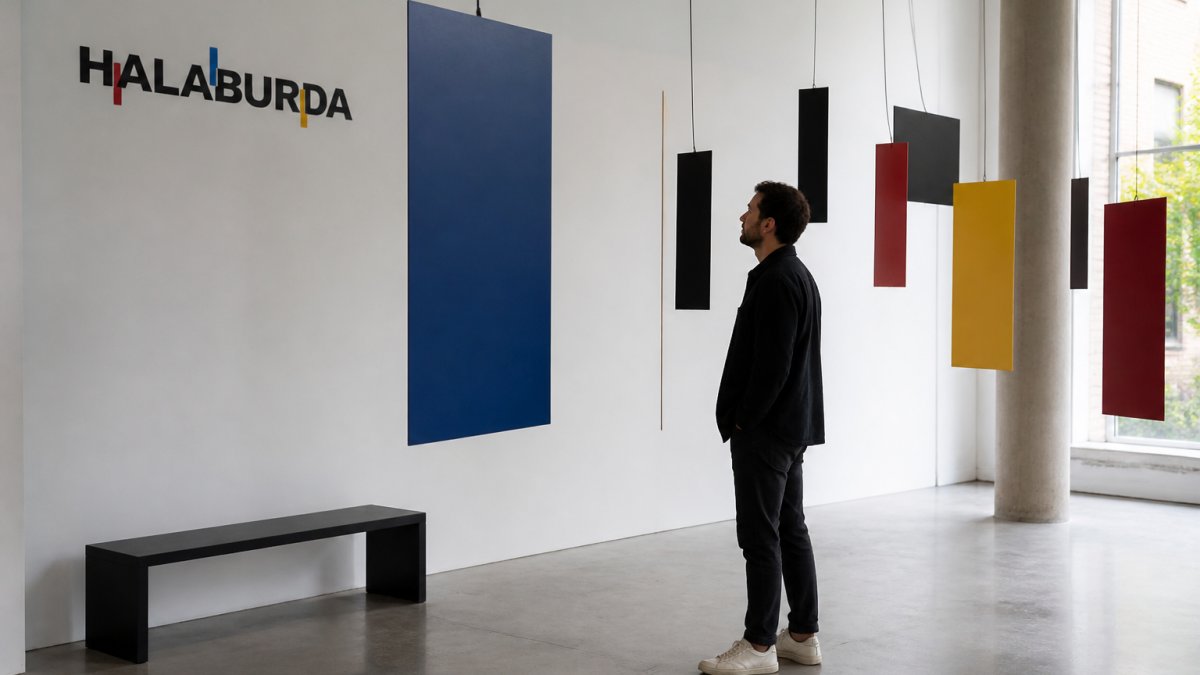
Abstract paintings for sale reward buyers who do their homework: verify provenance, understand the medium, judge scale, and buy from a source that stands behind its work. HALABURDA offers original abstract paintings, works on paper, and installations rooted in psychogeographical mapping, with an international exhibition history across New York, Paris, Santa Fe, and Basel. Explore the collection and read the full artist statement to see how each piece maps the relationship between place and mind.
Frequently Asked Questions
How much do abstract paintings typically cost?
Abstract painting prices vary widely based on the artist's reputation, size, medium, and provenance. Emerging artists might price works in the low hundreds, while established artists with international exhibition histories can command thousands. For HALABURDA's original abstract paintings, pricing depends on the specific piece, dimensions, and materials. We recommend contacting the studio directly for current pricing and availability.
How can you tell if an abstract painting is original?
Original abstract paintings are one-of-a-kind; you'll see unique brushwork, texture, and sometimes the artist's signature or studio stamp on the back. Reproductions are often printed and may lack surface texture. Ask for a certificate of authenticity and provenance details. HALABURDA provides documentation with each sale, ensuring you receive a legitimate original work.
How do you choose the right size abstract painting for a room?
A common guideline is to choose art that occupies about two-thirds to three-quarters of the wall width above a piece of furniture. For a sofa, the art should be roughly 2/3 the width of the sofa. In smaller rooms, a single large canvas can create a focal point, while a gallery wall works well in larger spaces. HALABURDA offers works in various sizes, from small studies to large-scale canvases.
What should you look for when buying an abstract painting online?
Check for high-resolution images, details about the medium and materials, dimensions, and whether the work is framed or unframed. Look for a certificate of authenticity and clear return policy. Read the artist's statement to understand the concept behind the work. HALABURDA's online gallery provides detailed descriptions and provenance, and you can reach out with any questions before purchasing.
Choosing art for a space you care about should feel like a decision, not a gamble. HALABURDA creates conceptually rich abstract work with documented process, international exhibition history, and a multidisciplinary practice spanning painting, works on paper, and installation. Visit the gallery, read the artist statement, and get started with HALABURDA to find a piece that belongs in your collection.
READ THE FULL ARTIST STATEMENT


Comments